The watch came in a padded envelope, no box, but well-wrapped. First glance was actually decent – the cushion-shaped case looked right, the sandwich dial had that signature depth, and the crown guard lever clicked open with a satisfying snap. The weight was close enough. On the wrist, it felt big, bold, and convincingly Italian. I wore it to a casual gathering and someone said “nice Panerai.” I felt like I’d won.
The Problems: A Slow Unravelling
By the end of the first week, the paint on the dial markers started flaking. Not fading – actual tiny black specks floating around inside the crystal. The crown guard lever then became loose, wobbling up and down without any resistance. The manual wind movement required winding every morning – but by day 10, the crown felt gritty and wouldn’t engage properly. The watch started losing 20 minutes a day. I opened the case back out of curiosity and found a cheap Chinese movement with Panerai engravings scratched into the surface. The “Swiss clone” was anything but.
The Verdict: All Muscle, No Movement
£430 for a watch that looked like a Panerai replica for three days, then spent the remaining week slowly dying on my wrist. The seller stopped replying to emails after my second message. A real Panerai is expensive – yes – but it holds value, tells time accurately, and doesn’t shed paint onto your dial. For the same £430, I could have bought a genuine Seiko or Hamilton that would run for decades without complaint. This Panerai replica gave me the look for five minutes – and an expensive lesson for the rest of my life.
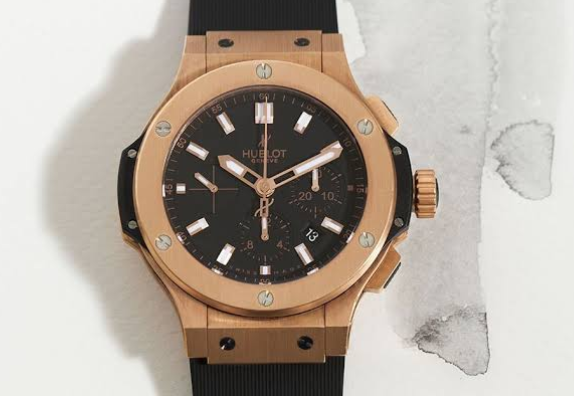
The watch arrived in a surprisingly nice box – faux carbon fibre, felt lining, even a “certificate” that looked almost convincing. First glance was genuinely impressive. The skeleton dial had layers. The rubber strap felt soft. The weight was heavy enough to feel substantial. I wore it to a client lunch and caught myself admiring my own wrist. For about four hours, I believed I had found the loophole.
Day by Day: The Collapse
Day 1: The chronograph second hand worked perfectly – then got stuck at 8 o’clock. Reset did nothing.
Day 3: The date wheel stopped flipping at midnight. It now changes at 4am – and only halfway, leaving two dates partially visible.
Day 5: The rubber strap started peeling around the edges where it meets the case. Faux carbon fibre my foot.
Day 7: The crown literally unscrewed in my hand when I tried to set the time. Not the crown itself – the entire winding stem came out with it.
I put it back in the box and never wore it again.
The Verdict: Not Worth the Paper It Was Shipped In
£460 for a watch that lasted seven days and had three major mechanical failures. The seller’s response? “This is normal for Hublot replica. You can buy spare parts from us for £80.” At that point, I’d have been better off buying a £500 G-Shock that could survive a war, or a genuine Tissot that would outlast my mortgage. The Hublot replica looked the part – until it didn’t. And when it fell apart, it fell apart in every way possible, all at once.
What you get: A watch that looks convincing from 3 feet away. Maybe 2 feet if the light is dim.
What you don’t get: Reliability. A movement that lasts. Water resistance. A clasp that stays closed. Customer service. Resale value. And the ability to look at your wrist without a small voice saying “you know that’s fake, right?”
The real cost: £500 for something that will likely break in 6–18 months. Then £0 resale value. Plus the quiet embarrassment of being called out – or worse, never being called out because no one believes you own a real one anyway.
Verdict: A waste of money disguised as a saving.
The Genuine (£5,000)
What you get: A watch that will outlive you. A movement serviceable by any watchmaker. 100m+ water resistance you can trust. A clasp that clicks once and stays clicked. A warranty. A box. Papers. A story. And a genuine feeling when you check the time.
What you don’t get: Value for money – if you’re measuring strictly by timekeeping. A £50 Casio keeps better time than a £5,000 Omega.
The real cost: £5,000 upfront. Plus servicing every 5–8 years (£300–£600 each time). Plus the anxiety of wearing something so expensive on your wrist.
Verdict: A waste of money if you don’t have £5,000 to spare. An investment if you do.
The Bottom Line
Replica (£500)
Genuine (£5,000)
Looks like a luxury watch
✅ From 3 feet
✅ From any distance
Tells time
✅ For a while
✅ For decades
Holds value
❌ £0 after purchase
✅ 60–90% retained
Makes you feel proud
❌ The opposite
✅ Genuinely
Smart financial decision
❌ No
⚠️ Only if you’re wealthy
The honest truth: If you have £500, buy a real Seiko, Citizen, or Tissot. If you have £5,000 and watches are your hobby, buy the genuine. But never – ever – spend £500 on a replica. That’s not a shortcut. That’s just wasting money with extra steps.
Final sentence: The real waste isn’t the £5,000 watch you can’t afford – it’s the £500 replica you buy instead of saving for something real.
I’ve read the forum posts. I’ve watched the “don’t buy replicas” YouTube videos. I’ve even laughed at friends who bought fake Rolexes that ticked like Timex. But the Breitling Navitimer does something to a certain kind of man. It whispers aviation, precision, heritage. It shouts I am a serious person who owns a leather jacket and understands slide rules.
The problem? A real Navitimer B01 costs £8,000+ in the UK. Even a second-hand, beaten-up one from 2003 is still £3,500. I am not that man. Or rather, I was not that man – until I found a website called best-swiss-replica.co.uk (which should have been my first warning).
There it was: a “Swiss Grade 1 Navitimer Clone” for £495. Free shipping to London. 1:1 weight. Functional chronograph. Working slide rule. “Exactly like genuine,” the chat bot told me.
I clicked “Buy Now” like a man stepping into an elevator with no floor beneath him.
The “Delivery” (A Study in Disappointment)
The watch arrived 11 days later in a grey plastic bag. No box. No padding. Just the watch rattling inside a cheap foam sleeve, accompanied by a “certificate of authenticity” that looked like it had been printed on a library printer in 1998.
I lifted the watch out.
First impression: Light. Too light. A real Navitimer feels like a hockey puck on your wrist – dense, brutal, unapologetic. This thing felt like a empty Coke can painted silver.
Second impression: The slide rule bezel was gritty. You know that satisfying, smooth, clicky rotation on a real Breitling? This one sounded like grinding gravel. And it was misaligned. At 12 o’clock, the bezel marker pointed halfway between 12 and 1. My eye went there immediately and never left.
Third impression: The chronograph second hand didn’t reset to zero. It stopped at 7 seconds. Every. Single. Time. I pressed reset. It bounced back to 7. I tried again. 7 seconds. I practically slammed the button. 7 seconds. Like a broken clock that’s wrong 24 hours a day.
The First Wear (Humiliation on Leather)
I wore it to a casual dinner with friends. I thought: Maybe no one will notice.
Within 30 minutes, three things happened:
The “leather” strap started peeling. Not cracking. Peeling. Like sunburned skin. Black flakes stuck to my wrist.
Someone asked to see it. A friend who actually owns a Breitling Superocean. He held it for two seconds, raised an eyebrow, and said: “This doesn’t feel right.” He didn’t even need to look at the dial. The weight gave it away.
I caught my reflection in a window. The watch looked… cheap. The polished case had a yellowish tint. The dial printing was fuzzy around the edges. The “BREITLING” text looked like it had been written by a shaky hand.
I spent the rest of the dinner with my hand under the table.
The Customer Service Circus (Where Logic Goes to Die)
I emailed the website the next day. Polite. Detailed. I attached photos of the misaligned bezel, the chronograph hand resting at 7 seconds, the peeling strap.
Day 2 reply: “Please send video.”
I sent a video.
Day 5 reply: “This is normal for replica. You can send back for repair. Pay £65 shipping.”
I asked: “Will you fix the bezel alignment and the chronograph?”
Day 7 reply: “We will check. Please send £65 first.”
I asked for a refund instead.
Day 9 reply (my favourite): “We do not offer refunds. You knew this is replica. What did you expect? Breitling quality? Haha.”
I paid £495 for a “haha.”
The Technical Post-Mortem (What Actually Broke)
I took the watch to a local watch repair shop out of curiosity. The technician opened the back, looked inside, and literally laughed.
The movement: Not a Swiss clone. Not even a Japanese miyota. It was a Chinese Tongji 2813 – a movement that costs about £8 on Alibaba. He pointed at the rust on one of the gears and said: “This won’t last six months.”
The “904L steel”: A magnet stuck to it immediately. Real 904L is non-magnetic or weakly magnetic. This was basic 316L at best. More likely just cheap plated brass.
The slide rule: “The bezel spring is broken,” he said. “It was probably broken when they assembled it. They just shipped it anyway.”
The water resistance: He pressure-tested it. It failed at 1 metre. Sweat from your wrist would kill this watch within a month.
His final verdict: “This is a £50 watch sold for £500. You were the victim, not the customer.”
The Verdict: Worthwhile Investment or Waste?
Let me be absolutely clear.
Claim
Reality
“Swiss Grade 1 Clone”
£8 Chinese movement with rust
“1:1 weight”
40% lighter than genuine
“Functional chronograph”
Resets to 7 seconds, not zero
“Working slide rule”
Misaligned and gritty
“Leather strap”
Peeling plastic-coated cardboard
“Waterproof”
Fails at 1 metre
“Exactly like genuine”
Exposed as fake in 2 seconds
Was this a worthwhile investment?
No. Not even close.
£495 could have bought me:
A genuine Seiko 5 Sports (£300) + a night out (£195)
A Citizen Eco-Drive that will run for 20 years (£250) + £245 in my pocket
A Hamilton Khaki (£500) – an actual Swiss-made automatic watch with heritage
Or, if I really wanted a chronograph, a Dan Henry 1962 (£270) – a beautiful, honest homage from a respected microbrand
Instead, I have a paperweight that looks like a Breitlinish from 10 feet away, smells like regret, and reminds me every time I look at it that I paid £495 to look like someone who can’t afford a £495 watch.
The Hard Truth (For Anyone Thinking About Doing This)
The replica watch industry in the UK survives because of people like me: hopeful, impatient, and just naive enough to believe a website that promises Swiss quality for 6% of the price.
Here’s what you’re actually buying:
Not a watch. A costume accessory with moving parts.
Not value. A transaction where you pay 10x what the product is worth.
Not status. A neon sign that says “I couldn’t wait, and I couldn’t afford the real thing.”
If you want a Breitling, save for it. Buy a pre-owned one from a trusted UK dealer. Or buy a different watch entirely – there are incredible options at £500 that come with a warranty, a box, and the ability to look a friend in the eye without sweating.
But do not – under any circumstances – type your credit card into a replica website.
Because the only thing worse than not owning a Navitimer?
Owning a fake Navitimer.
Final Rating (for the UK replica buying experience): -10/10
Would I recommend it? I would rather recommend lighting £495 on fire. At least that would keep you warm for 30 seconds.
One-sentence summary: My Breitling replica didn’t take off – it crashed, burned, and took my dignity with it.
The watch arrived in a plain grey envelope. No box. No papers. Just the watch wrapped in bubble wrap. First impression was decent – the blue dial caught the light nicely, and the ceramic bezel looked clean. The weight felt close enough. I wore it to dinner that night and caught myself checking my wrist more than checking the time. For one evening, I convinced myself I’d pulled it off.
Next 24 Hours: The Collapse
The next morning, the helium escape valve (a purely decorative feature on this replica) fell out. Just… dropped onto my bathroom floor. Later that day, I noticed condensation under the crystal after washing my hands – “300m water resistance” claimed the dial. By evening, the second hand started stuttering. Not ticking smoothly, but jerking forward in uneven, desperate lurches. I stopped wearing it after 48 hours.
The Verdict: A Complete Waste
I paid £420 for a watch that lasted two days and couldn’t survive hand soap. The seller ignored my first email, then replied on the second with: “You buy replica. This is normal.” For the same money, I could have bought a genuine Citizen or Seiko that would run for a decade. Instead, I own a broken paperweight that reminds me daily that cheap shortcuts lead to expensive regret. Don’t do it.